

Web series are the fastest-growing format in scripted content. YouTube, Instagram, TikTok, and independent streaming platforms have created a massive audience for short-form episodic storytelling. But writing a web series is fundamentally different from writing a feature film or a traditional TV pilot.
In this guide, we cover the key structural decisions you need to make when planning a web series, and how to organize your episodes so your story stays coherent across the entire season.
What makes a web series different
A web series typically has shorter episodes (5-15 minutes), tighter arcs, and a faster pace than traditional TV. Your audience is watching on their phone, often in public, and they can click away at any moment.
This means every episode needs to:
- Hook immediately: You don't have the luxury of a slow build. The first 30 seconds need to grab attention.
- Deliver a complete beat: Each episode should feel satisfying on its own, even if it's part of a larger story.
- End with momentum: Cliffhangers, questions, or emotional peaks that make viewers click "next."
Choosing your episode format
Before writing a single scene, decide on your episode structure:
| Format | Episode Length | Best For |
|---|---|---|
| Micro-series | 3-5 min | TikTok, Instagram, social-first content |
| Short-form | 5-10 min | YouTube, indie web series |
| Standard | 10-20 min | YouTube Premium, Vimeo, indie platforms |
| Long-form | 20-30 min | Traditional streaming, TV-adjacent |
Most new creators succeed with 5-10 minute episodes. It's long enough to tell a real story, short enough to produce on a budget.
The three-layer structure
A well-structured web series operates on three layers simultaneously:
1. Season arc (macro)
This is your overall story. What is the central question of your season? What does your protagonist want, and what stands in their way?
Write a one-paragraph season logline before you outline any episodes. For example:
A freelance journalist discovers that her small-town newspaper is sitting on evidence of a decade-old cover-up. Over 8 episodes, she must decide whether to publish the truth and destroy the community she loves.
2. Episode arc (micro)
Each episode needs its own mini-arc with a beginning, middle, and end. Think of each episode as a chapter in a novel. It advances the season story while also delivering its own satisfying narrative beat.
A simple episode structure:
- Cold open (0:00-0:30): Hook the viewer with action, conflict, or a question.
- Setup (0:30-2:00): Establish the episode's specific problem or goal.
- Confrontation (2:00-6:00): Your character pursues the goal and hits obstacles.
- Climax (6:00-8:00): The episode's turning point.
- Tag (8:00-9:00): Resolution + hook for the next episode.
3. Scene-level beats
Within each episode, every scene should serve at least one of these purposes:
- Advance the plot
- Reveal character
- Build tension
- Deliver information the audience needs
If a scene doesn't do any of these, cut it. Web series have no room for filler.
Planning your season
Step 1: Define your season in one page
Write down:
- Logline: One sentence describing the season's central conflict.
- Protagonist: Who they are, what they want, what they fear.
- Antagonist/Obstacle: What stands in the way.
- Theme: What is this season really about?
- Episode count: 6-10 episodes is the sweet spot for a first season.
- Episode length: Pick one and stick to it (consistency matters).
Step 2: Create a beat sheet per episode
For each episode, outline 5-8 beats. These are the key moments that move the story forward. Don't write dialogue yet. Just map the emotional and narrative trajectory.
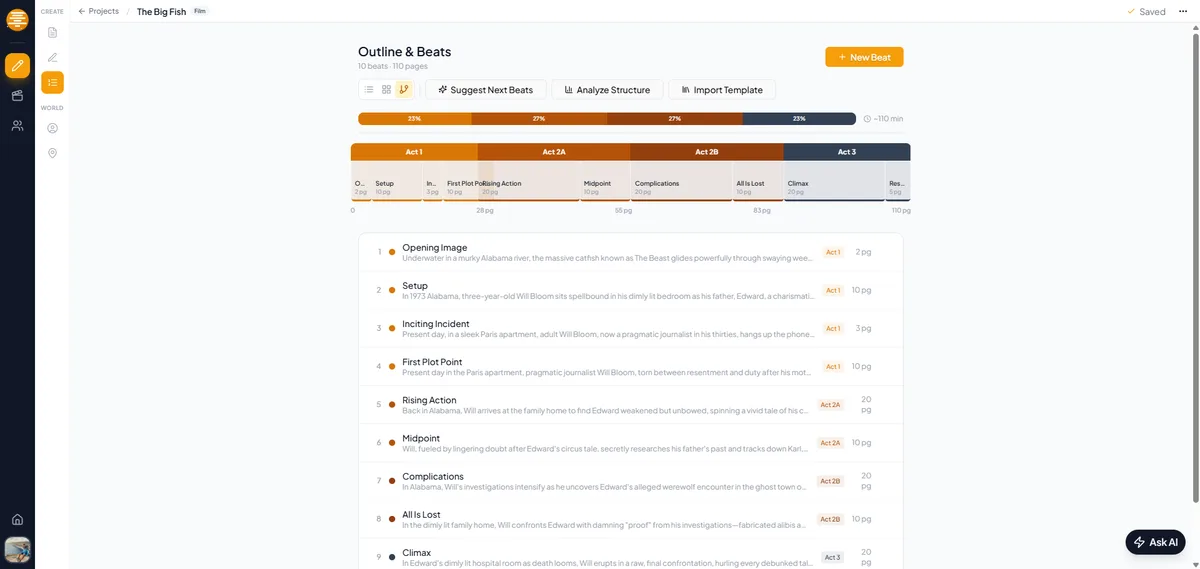
In plotwell, you can use the Beat Sheet view to plan each episode's structure before writing the script. Each episode in a series project gets its own beat sheet, script, storyboard, and production breakdown.
Step 3: Track character continuity
One of the biggest challenges in episodic writing is continuity. If a character learns something in Episode 3, they can't act ignorant of it in Episode 5.
Keep a running document (or use plotwell's Characters view) that tracks:
- What each character knows at each point in the season
- Relationship status between characters
- Physical items, locations, and plot devices introduced
Step 4: Write episode by episode
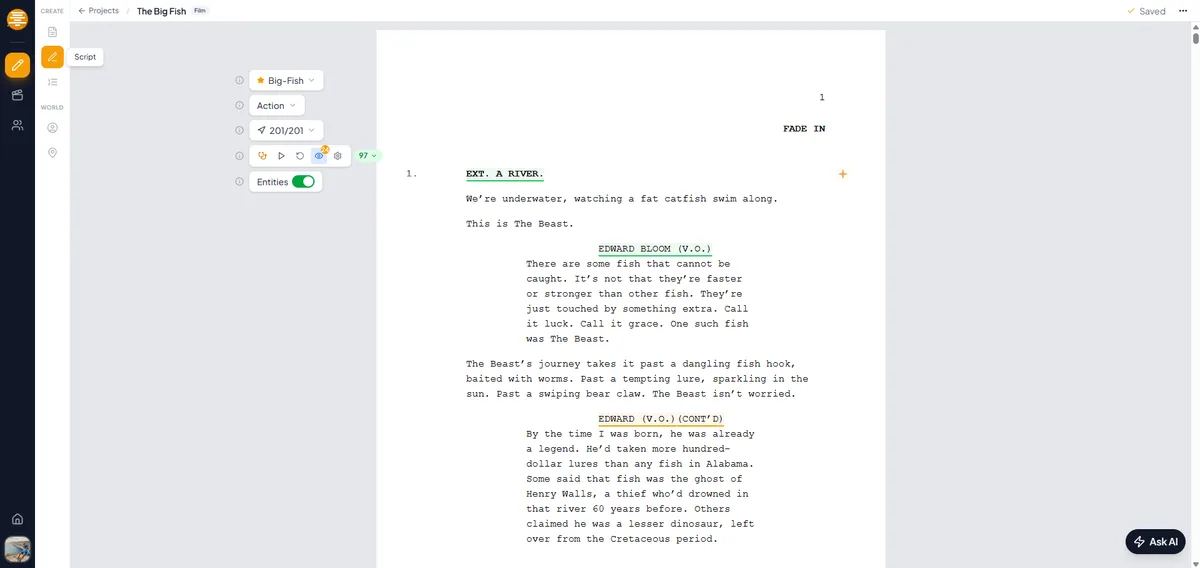
With your beat sheet done, write each episode as a standalone script. In plotwell, series projects let you navigate between episodes with a single click, each with its own script editor, while sharing the same characters, locations, and project context.
Common mistakes in web series structure
- Too many characters too fast: Introduce 2-3 characters in Episode 1. Add new ones gradually.
- No episode identity: If you can't describe what happens in Episode 4 in one sentence, the episode lacks focus.
- Ignoring the platform: A 25-minute episode on TikTok won't work. Know where your audience watches.
- Skipping the outline: Jumping straight to scripts leads to plot holes and pacing issues. Outline first.
- Inconsistent release cadence: Plan your production so you can release consistently. Your audience expects regularity.
Tools for managing episodic content
Traditional screenwriting software was built for features. Writing a series in Final Draft means juggling multiple files, losing track of continuity, and manually managing episode order.
plotwell's series mode was built specifically for this workflow:
- Season and episode management: Create seasons, add episodes, and navigate between them from a single project.
- Per-episode scripts: Each episode has its own script with industry-standard formatting.
- Shared story elements: Characters and locations are shared across all episodes in the project.
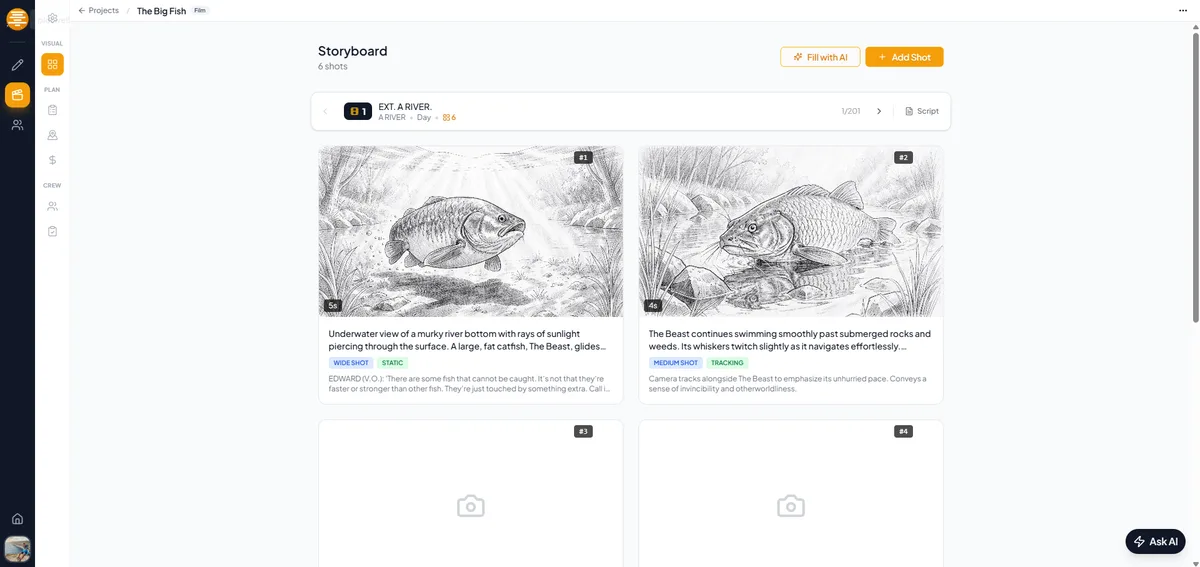
- Per-episode production: Storyboards, scene breakdowns, and budgets are tracked per episode.
- Real-time collaboration: Multiple writers can work on different episodes simultaneously.
Getting started
The best web series start with a simple question: What story can only be told in episodes?
If your story has a clear central arc but naturally breaks into distinct chapters or situations, it's a series. If it builds tension through accumulation rather than a single climax, it's a series.
Start with your season outline. Break it into 6-8 episodes. Write beat sheets for each. Then start writing Episode 1.
The structure does the heavy lifting. Your job is to fill it with characters worth following.