

The writers room is the engine behind every great TV series. But the traditional model (10+ writers in a room for months) is built for network budgets and studio timelines. If you're creating a web series, indie pilot, or short-form episodic content, you need a leaner approach.
This guide covers how to run a small writers room with 2-5 people, using modern tools and workflows that keep everyone aligned without the overhead of a full production office.
What a small writers room actually looks like
Forget the image of a room full of whiteboards and index cards (though those still work). A small writers room is:
- 2-5 writers who meet regularly (in person or remote)
- One showrunner/lead writer who makes final decisions
- Shared access to all scripts, outlines, and story materials
- Clear episode assignments so everyone knows who's writing what
The goal is the same as a big room: break the season story, divide the episodes, write in a consistent voice, and deliver scripts on schedule.
Phase 1: Breaking the season (together)
Before anyone writes a single episode, the whole team breaks the season together. This is the most important phase. Rushing it leads to plot holes, tonal inconsistency, and wasted rewrites.
The season break process
- Pitch the premise: The showrunner presents the season concept, central conflict, and character arcs.
- Map the arc: Together, identify the key turning points. What happens at the midpoint? What's the season climax? How does it end?
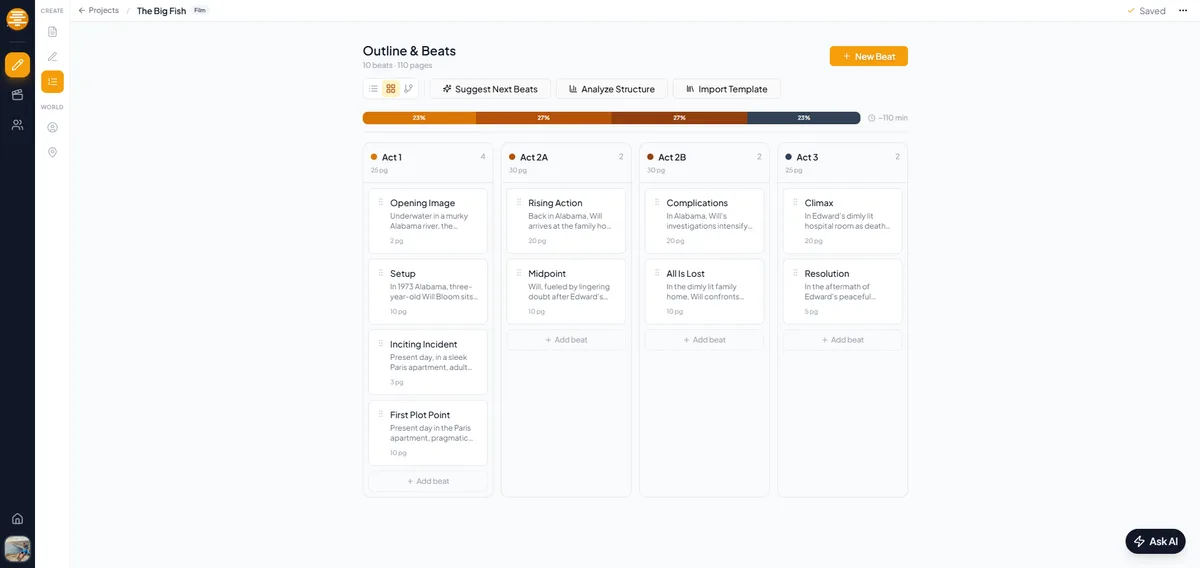
- Episode grid: Create a grid with one row per episode. For each episode, write a 2-3 sentence summary of what happens.
- Character tracking: Make sure each main character has a clear arc across the season. Where do they start? Where do they end?
This phase usually takes 2-4 sessions of 2-3 hours each. Don't rush it.
Tools for season breaking
- A shared document or whiteboard for the episode grid
- plotwell's Beat Sheet view for per-episode structure
- Character profiles in plotwell's Characters view (shared across all episodes)
Phase 2: Assigning episodes
Once the season is broken, the showrunner assigns episodes to writers. Here's how to divide the work:
Assignment principles
- Play to strengths: If someone writes great dialogue, give them the dialogue-heavy episodes. If someone excels at action, give them the set pieces.
- Pair critical episodes: The pilot and finale should usually be written by the showrunner or the strongest writer.
- Buddy system: For a 4-writer room with 8 episodes, each writer takes 2 episodes. They also review their neighbor's episodes for continuity.
The outline handoff
Before a writer starts their episode script, they write a detailed outline (1-2 pages) that the showrunner approves. This prevents major structural rewrites later.
The outline should include:
- Scene-by-scene breakdown
- Key dialogue moments (paraphrased, not written)
- How the episode connects to the one before and after it
- Any new characters or locations introduced
Phase 3: Writing (in parallel)
Once outlines are approved, writers work on their assigned episodes simultaneously. This is where collaboration tools become critical.
Staying aligned while writing apart
- Weekly check-ins: 30-minute calls where each writer shares progress and flags issues.
- Shared character voice doc: A page of sample dialogue for each main character, so all writers maintain a consistent voice.
- Continuity tracker: What each character knows, owns, or has experienced up to each episode.
- Script access: Everyone should be able to read everyone else's scripts as they develop.
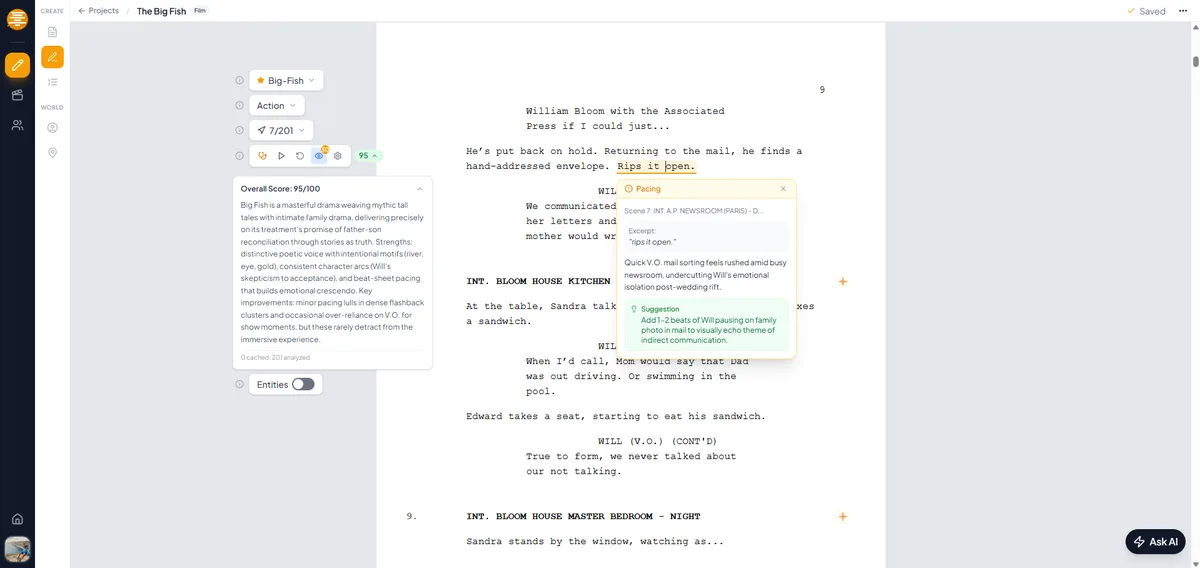
In plotwell, series projects give every team member access to all episodes. Writers can read each other's scripts in real-time, leave comments, and track changes without switching between files or emailing drafts.
Phase 4: Rewriting and polishing
After first drafts are complete, the showrunner reads all episodes in sequence and identifies:
- Tonal inconsistencies: Does Episode 3 feel like it's from a different show?
- Continuity errors: Does a character reference something that hasn't happened yet?
- Pacing issues: Are there two slow episodes in a row? Two climaxes too close together?
The showrunner then assigns rewrite notes. In a small room, this is usually a collaborative process: the original writer rewrites based on notes, then the showrunner does a final polish pass.
The rewrite cycle
- First draft by assigned writer
- Showrunner notes (2-5 pages of feedback)
- Second draft by assigned writer
- Table read (the team reads the episode aloud together)
- Final polish by showrunner
For web series, you can often compress steps 3-5 into a single session.
Common small room mistakes
- Skipping the season break: Writing episodes before the season is fully broken leads to rewrites that could have been avoided.
- No single voice: Without a showrunner doing a polish pass, episodes feel disconnected. One person needs to be the final filter.
- Email-based workflow: Sending script drafts as email attachments creates version chaos. Use a tool where everyone works on the same version.
- No episode outline approval: Writers who start scripting before their outline is approved waste time on structural rewrites.
- Ignoring the buddy system: When nobody reads adjacent episodes, continuity errors pile up.
Remote vs. in-person
Small writers rooms work well remotely if you:
- Use video calls for the season break (screen sharing + a shared doc)
- Have a single source of truth for all scripts (not email attachments)
- Schedule regular check-ins (don't rely on async-only communication for creative decisions)
- Use real-time collaboration tools so writers can see each other's progress
plotwell's collaboration features let multiple writers work on the same series project simultaneously, with real-time editing, threaded comments, and role-based permissions. The showrunner can review any episode at any time without requesting files.
A sample weekly schedule
For a 4-person room writing an 8-episode web series:
| Week | Activity |
|---|---|
| 1-2 | Season break (all together, 3 sessions) |
| 3 | Episode outlines (individual, reviewed by showrunner) |
| 4-5 | First drafts (individual, parallel writing) |
| 6 | Read-through + showrunner notes |
| 7 | Second drafts + polish |
| 8 | Final table read + lock scripts |
Total: 8 weeks from first meeting to locked scripts. That's fast, and it's possible because the season break was thorough and the tools support parallel work.
The right tools for a small room
A small writers room needs:
- Shared script access: All episodes in one place, accessible to all writers
- Real-time collaboration: See changes as they happen, not after email sync
- Episode management: Navigate between episodes without juggling files
- Comments and feedback: Inline notes on scripts, not separate documents
- Character and location tracking: Shared across all episodes
plotwell was built for exactly this workflow. Create a series project, add your episodes, invite your team, and start writing. Each episode gets its own script, storyboard, and production breakdown, all managed from a single project.
The writers room doesn't need to be big to be effective. It just needs to be organized.