
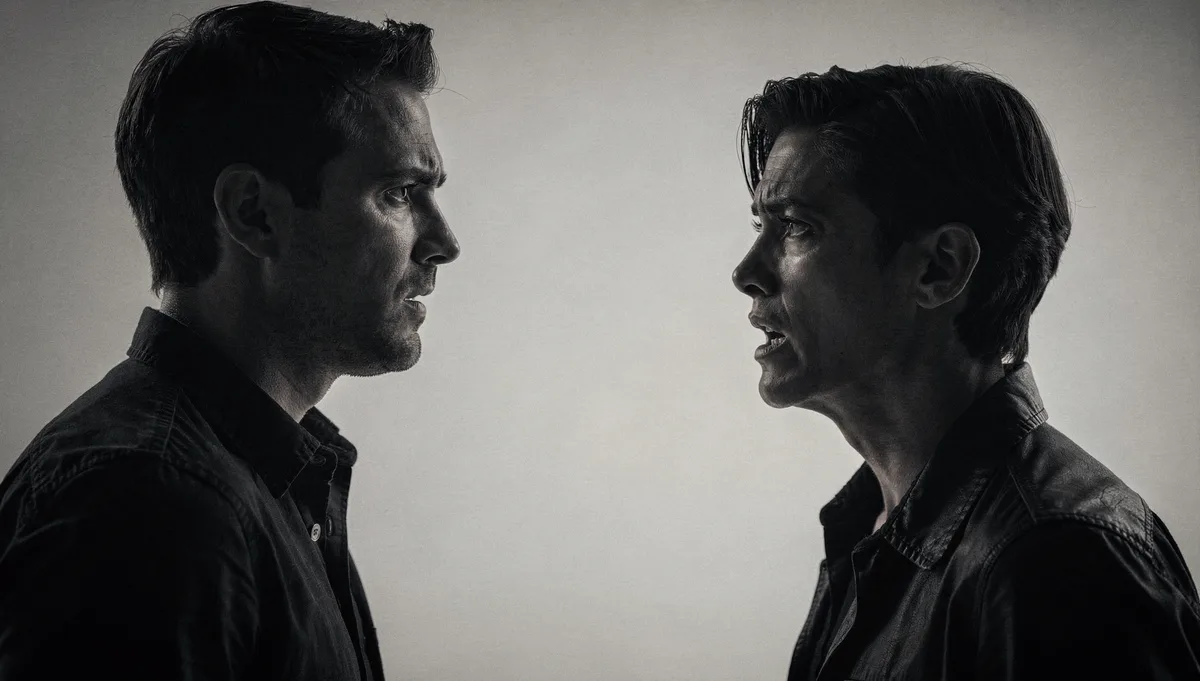
You can always tell when dialogue was written rather than heard. The sentences are too complete. Every character finishes their thought. Nobody talks over anyone else. The information is distributed too evenly - every scene ends with both characters knowing roughly what the audience needs them to know.
Real dialogue is broken, partial, and full of avoidance. People talk around things. They answer questions they weren't asked. They interrupt themselves. They say the wrong thing and don't correct it. Capturing this on the page - while still moving the story forward - is one of the harder skills in screenwriting.
Here's what separates dialogue that reads on the page from dialogue that plays on screen.
The Line Is Not the Point
Most beginning screenwriters think dialogue is about what characters say. It's actually about what they want, and what they're doing to get it.
Every line of dialogue is an action. A character who says "Do you want to get dinner sometime?" is making an overture. A character who says "You look tired" might be expressing concern, establishing superiority, or changing the subject. A character who says "I don't know what you're talking about" is deflecting, lying, or buying time - the words themselves don't specify which.
When you write a line, ask: what is this character doing right now, in this moment, with these words? If the answer is "describing the plot" or "explaining backstory," the line is likely to feel written. Characters who are doing something - pursuing, deflecting, testing, accusing, comforting - produce dialogue that plays.
Subtext Is Not Optional
Subtext is the gap between what a character says and what they mean. It exists in almost every meaningful conversation because human beings don't directly state most of what they feel. We approach difficult things sideways. We test before we commit. We hold back until we're certain.
A scene between two characters who are in love but haven't said so is almost entirely subtext. Neither character says "I'm in love with you." Instead, they argue about something else, find excuses to extend conversations that should have ended, say the wrong thing and immediately qualify it. The love is present in the dialogue without being stated.
The mistake beginning writers make is resolving the subtext too early. A scene where both characters say exactly what they mean is not a scene - it's a summary. Let them circle the real subject. Let the audience understand what's happening before the characters acknowledge it. The moment of acknowledgment, when it finally comes, lands much harder if it's been deferred.
Interruption and Incompletion
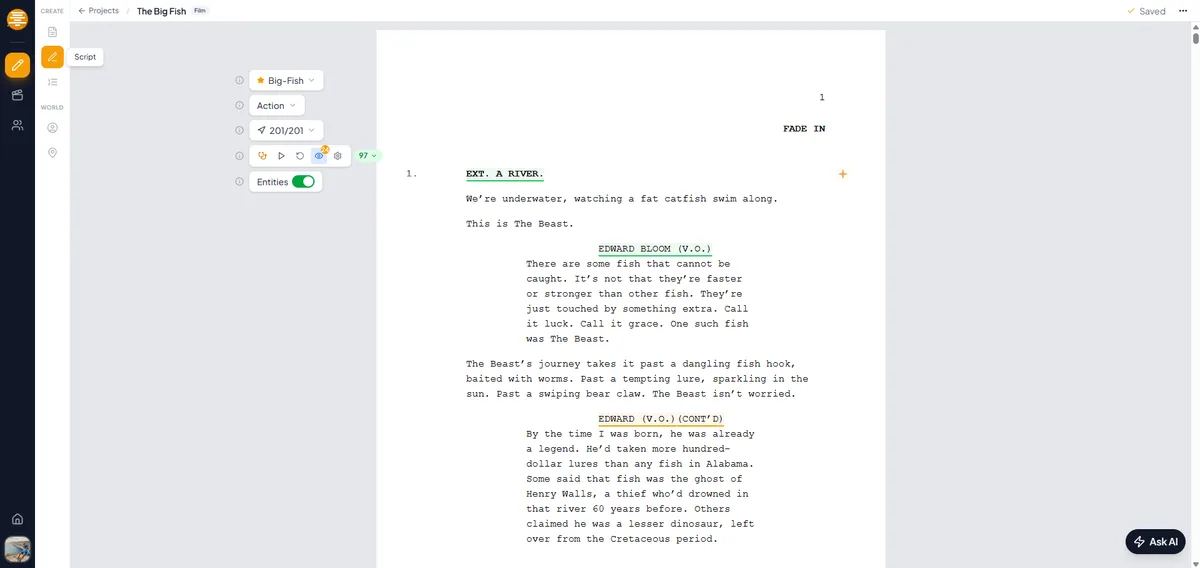
Look at how people talk in real life. Sentences don't end. Someone starts a thought, gets interrupted, moves to a different thought, circles back. Two people talk simultaneously. Someone says "I was going to - " and then stops because the other person has already started responding.
This is harder to write than it looks because you have to decide which incomplete thoughts to include and which to cut. The rule is: keep the interruptions and incompletions that change the meaning or the dynamic. Cut the ones that are just realistic noise.
In screenplay format, interruption is marked with a dash:
         ELEANOR
I just thought that maybe we
could  -

         JAMES
No. That's not going to work.
The dash tells the actor and reader that Eleanor was cut off. Notice that the incomplete line still tells us something - Eleanor was about to propose something she believed would solve the problem. James's preemptive "No" tells us he already knows what she's going to say and has decided against it. Two lines, a lot of information, none of it stated directly.
Specificity Over Generic
"I hate you" is generic. "I wasted seven years on this marriage" is specific. "Don't talk to me like that" is generic. "You called my mother stupid in front of her friends" is specific.
Generic dialogue produces generic characters. Specific dialogue - dialogue that could only come from this character in this situation - is what makes a character feel real.
The way to find specificity is to ask what this particular character would say about this particular subject given what you know about their history, their relationship with the other character, and what they want right now. A character who grew up poor talks about money differently than a character who grew up wealthy. A character who's been lied to talks about trust differently than a character who hasn't.
A useful exercise: take a piece of dialogue you've written and ask whether any character in any story could say it. If the answer is yes, make it more specific. The dialogue should feel like it belongs to this person and no one else.
Voice Differentiation
In a properly written script, you should be able to cover the character names and tell who's speaking from the dialogue alone. Each character has a distinctive voice - a rhythm, a vocabulary, a set of verbal habits.
Voice differentiation doesn't mean every character talks in dialect or uses unusual speech patterns. It means characters think and talk differently because they are different people with different backgrounds, different levels of education, different emotional temperatures, and different conversational strategies.
One practical approach: give each major character a verbal habit or pattern that's consistent throughout the script. One character always answers questions with questions. Another never finishes sentences (see above). Another always uses professional or technical language in personal conversations - a doctor who talks about feelings in clinical terms, a lawyer who frames emotional disputes as arguments. These habits, applied consistently, create differentiation without making the dialogue feel gimmicky.
The Information Problem
Every scene in a screenplay has to move the story forward and give the audience new information. Dialogue is the primary tool for delivering that information. The craft challenge is delivering the information without making the delivery visible.
Expository dialogue - dialogue whose sole purpose is to convey information the audience needs - is the most common failure mode in first drafts. "As you know, Bob, the company has been struggling since the merger two years ago" is expository dialogue. The character is speaking to the audience, not to Bob. Bob already knows this.
The fix is to find conflict in the exposition. Instead of characters telling each other things they already know, find a situation where one character needs information the other has, and where the other character has a reason not to give it freely. The exposition gets delivered through the conflict, not around it.
Another fix is to bury exposition inside a scene that's doing something else. A scene whose surface function is an argument can deliver exposition as ammunition. A scene whose surface function is seduction can reveal history as intimacy. The audience receives the information while watching something that holds their attention.
Read It Out Loud
The most reliable test for dialogue is reading it aloud or having someone else read it. Problems that are invisible on the page become immediately apparent when spoken: a sentence that's too long to say in one breath, a word combination that's awkward to pronounce, a rhythm that doesn't feel natural.
Better than reading it yourself is having actors cold-read it. Actors will instinctively pause at unnatural line breaks, stumble over sentences that don't flow, and demonstrate in real time which lines give them something to play and which don't. A single table read can identify twenty dialogue problems that weeks of revision missed.
This is why playwrights often develop plays through readings before production. The dialogue has to work in the room, not just on the page. Screenwriters don't always have the same opportunity, but the principle applies: get the words out of your head and into the air as soon as possible.
On Profanity and Slang
Profanity is a stylistic choice, not a realism requirement. Some writers believe authentic dialogue requires swearing because real people swear. Some of them swear freely. The choice should be driven by character and tone, not by an abstract commitment to realism.
The practical consideration: excessive profanity in a script can read as a substitute for precision rather than as a character voice. If every line of dialogue from your protagonist contains an expletive, the expletives stop signaling anything - they're just noise. Reserve the strong language for moments when it means something.
Slang ages quickly and often reveals the period in which a script was written in ways the writer didn't intend. Period slang (dialogue set in a historical period) requires research. Contemporary slang is fine if used accurately - nothing breaks authenticity faster than slang deployed incorrectly, especially for younger characters.
The Last Line of Every Scene
The last line of a scene should leave the audience wanting to know what happens next. Not in a cliffhanger sense - not every scene ends with a revelation - but in the sense that something has changed and the change has consequences that we haven't seen yet.
A scene that ends with both characters understanding each other and the situation resolved is a scene that doesn't need to exist. If nothing changed by the end of the scene, the scene shouldn't be there. And if something changed, the last line of dialogue should reflect that change - should land with the weight of what just happened.
The last line is the one audiences remember. Write it last, after everything else is right, and give it the attention it deserves.